Avoid These 3 Costly Mistakes
This is paragraph text. Click it or hit the Manage Text button to change the font, color, size, format, and more. To set up site-wide paragraph and title styles, go to Site Theme.
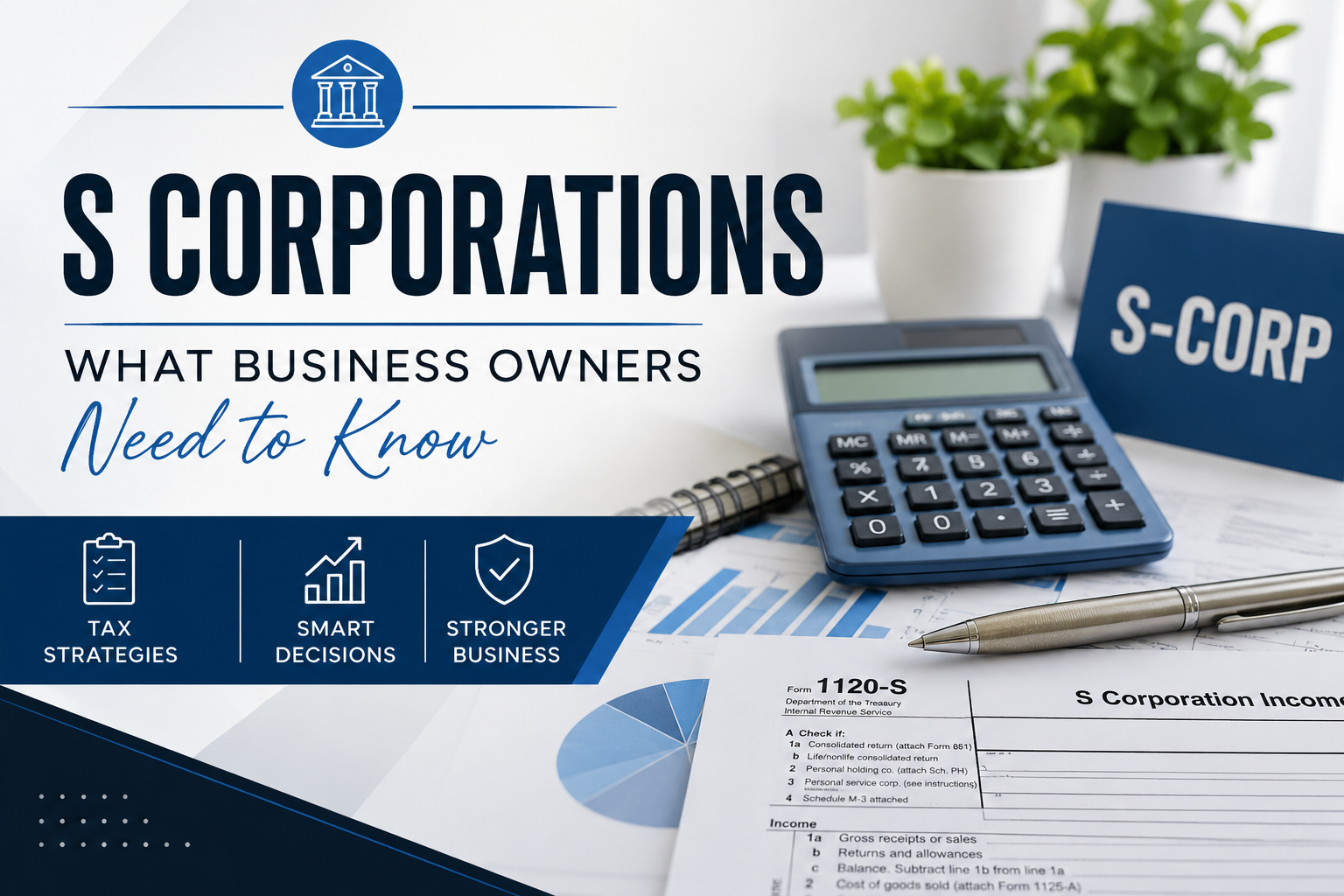
Pitfall #1: Choosing S Corp Status Without Understanding the Eligibility Rules
What the Pitfall is:
Many business owners assume any corporation or LLC can elect S Corporation status. However, the IRS requires businesses to meet the definition of a "small business corporation" before making the election.
Common eligibility requirements include:
- Being a domestic corporation.
- Having 100 or fewer shareholders.
- Having only permitted shareholder types.
- Having only one class of stock.
It's also important to understand that certain shareholders, such as other corporations, partnerships, and nonresident aliens, are not permitted S Corporation shareholders. In addition, having more than one class of stock (for example, preferred stock with different rights) can disqualify an S Corporation election.
How to avoid it
Before filing Form 2553:
- Work with Barklee Financial Group to complete a shareholder eligibility review.
- Review your corporation's organizational documents—including articles of incorporation, bylaws, and shareholder agreements—to confirm there is only one class of stock for federal tax purposes.
- Verify that all owners qualify as permitted S Corporation shareholders, including individuals, estates, certain trusts, and qualifying tax-exempt organizations.
Taking time to confirm eligibility before filing can help avoid costly corrections later.
Pitfall #2: Filing the S Corporation Election Incorrectly or Too Late
What this pitfall is:
Even if your business qualifies, filing Form 2553 incorrectly—or missing the filing deadline—can prevent your S Corporation election from becoming effective for the intended tax year.
Common issues include:
- Missing the filing deadline.
- Overlooking required shareholder consents or community-property spouse signatures.
- Relying on IRS relief procedures after the fact to correct a defective or late election.
How to avoid it
Plan ahead and coordinate with your tax advisor to ensure Form 2553 is filed on time.
Generally, the election must be filed:
- Within 2 months and 15 days after forming the business, or
- Within 2 months and 15 days of the beginning of the tax year you want the S Corporation election to take effect.
Example:
- Business created on September 1, 2025 → Election should be filed by November 16, 2025 for 2025 S Corporation status.
- To elect S Corporation status effective for 2026, the election should generally be filed by March 16, 2026.
Additional best practices include:
- Make sure all required shareholders (and spouses, when applicable) properly sign the election documents.
- Keep copies of the filed election and the IRS acceptance notice.
- Mail the election by certified mail and retain the receipt, or fax it and keep the transmission confirmation for your records.
This is one of the most common—and most preventable—mistakes business owners make.
Pitfall #3: Misunderstanding Pass-Through Taxation and Shareholder Basis
What this pitfall is:
Another common misconception is believing the S Corporation itself pays federal income taxes.
In reality, an S Corporation is generally considered a pass-through entity, meaning its income, losses, deductions, and credits pass through to the shareholders and are reported on their individual tax returns.
Business owners also frequently overlook the importance of tracking shareholder basis. A shareholder's basis helps determine:
- Whether business losses can be deducted.
- How certain distributions are taxed.
- Whether losses exceed the shareholder's allowable basis.
Attempting to deduct losses that exceed shareholder basis is one of the more common S Corporation reporting errors.
How to avoid it
Understanding how pass-through taxation works is essential.
- Remember that S Corporation profits (and many losses) are reported to shareholders on Schedule K-1 and flow through to their individual tax returns.
- Maintain an annual basis schedule for each shareholder that reflects contributions, income, losses, and distributions.
- Before deducting losses, verify that each shareholder has sufficient stock basis (and loan basis, when applicable), while also considering the at-risk and passive activity loss rules.
Working with your tax advisor throughout the year can help ensure these calculations remain accurate and avoid surprises at tax time.
Final Thoughts
Electing S Corporation status is an important decision that should be made carefully. Understanding the eligibility requirements, filing deadlines, and pass-through tax rules can help your business avoid costly mistakes before they happen.
In our next blog, we'll cover three additional S Corporation pitfalls that often occur after the election is made—including reasonable compensation, ongoing compliance requirements, and one of the biggest misconceptions business owners have about how S Corporation income is taxed.