
Be ready for the 2026 Mid-year Mileage Change
If you use the standard mileage rate to deduct business driving or receive mileage reimbursements, the IRS made an important change for 2026.
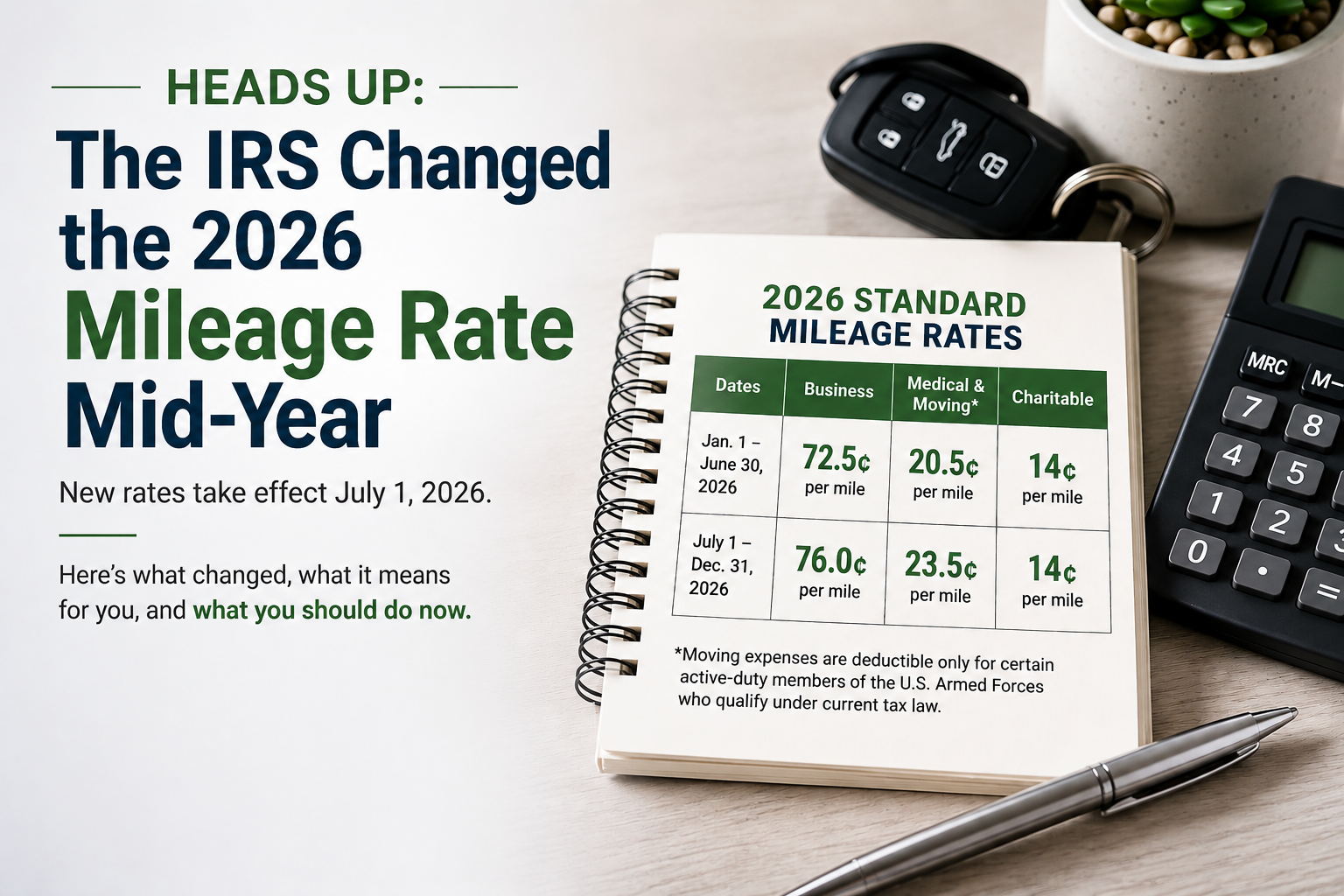
Beginning July 1, 2026, the IRS increased the standard mileage rates for business, medical, and moving travel. Because the change took effect in the middle of the year, you'll need to separate your 2026 mileage into two time periods when preparing your records and tax return. Mid-year mileage rate changes are uncommon, making this one easy to overlook.
What Changed to the IRS Mileage Rate for 2026?
The IRS increased the optional standard mileage rates effective July 1, 2026, in response to rising fuel prices.
January 1-June 30, 2026
- Business - 72.5¢ per mile
- Medical & Moving* - 20.5¢ per mile
- Charitable - 14¢ per mile
July 1 – December 31, 2026
- Businiess - 76.0¢ per mile
- Medical & Moving* - 23.5¢ per mile
- Charitable - 14¢ per mile
*Moving expenses are deductible only for certain active-duty members of the U.S. Armed Forces who qualify under current tax law.
How Does the Mid-Year Mileage Rate Change Affect Me?
The biggest takeaway isn't simply that the mileage rate increased—it's that 2026 is now a split-rate year.
If you use the standard mileage method, you'll need to track your mileage separately for:
- January 1 through June 30, 2026
- July 1 through December 31, 2026
Using one total mileage number for the entire year may not provide enough information when it's time to prepare your tax return or calculate employee mileage reimbursements.
Quick Tip: If you use a mileage tracking app, verify that it applies the new rate beginning July 1, 2026. If you keep a manual mileage log, start maintaining separate mileage totals for the first and second half of the year. Taking a few minutes now could save you time and frustration at tax season.
What Should I Do Now?
If you haven't been tracking mileage by date, now is a great time to review your records.
Many mileage tracking apps automatically record travel dates, making it easy to separate mileage before and after July 1. If you keep a manual mileage log, consider totaling your mileage for each period now while the information is still fresh. Waiting until tax season may make the process much more difficult.
How Does This Affect Employee Mileage Reimbursements?
Businesses that reimburse employees for business mileage should also be aware of this change. The new mileage rate applies to travel that occurs on or after July 1, 2026. Mileage driven before July 1 continues to use the earlier rate, even if the reimbursement is paid after July 1.
If your business reimburses employees for mileage, now is a good time to confirm that your reimbursement process reflects the updated IRS guidance.
Still Have Questions About the 2026 Mileage Rate?
Tax laws don't always change at the beginning of the year. Occasionally, the IRS makes adjustments that take effect mid-year, and this is one of them.
If you have questions about how this mileage rate change affects your business, employee reimbursements, or tax records, Barklee Financial Group is here to help. We'll help you understand what changed, keep your records on track, and make tax season a little easier.