Here's what taxpayers need to know
If you've ever received an IRS penalty for filing or paying late, you've probably heard of First-Time Abate (FTA). The IRS is changing how eligible taxpayers receive penalty relief, making the process easier for many taxpayers who qualify.
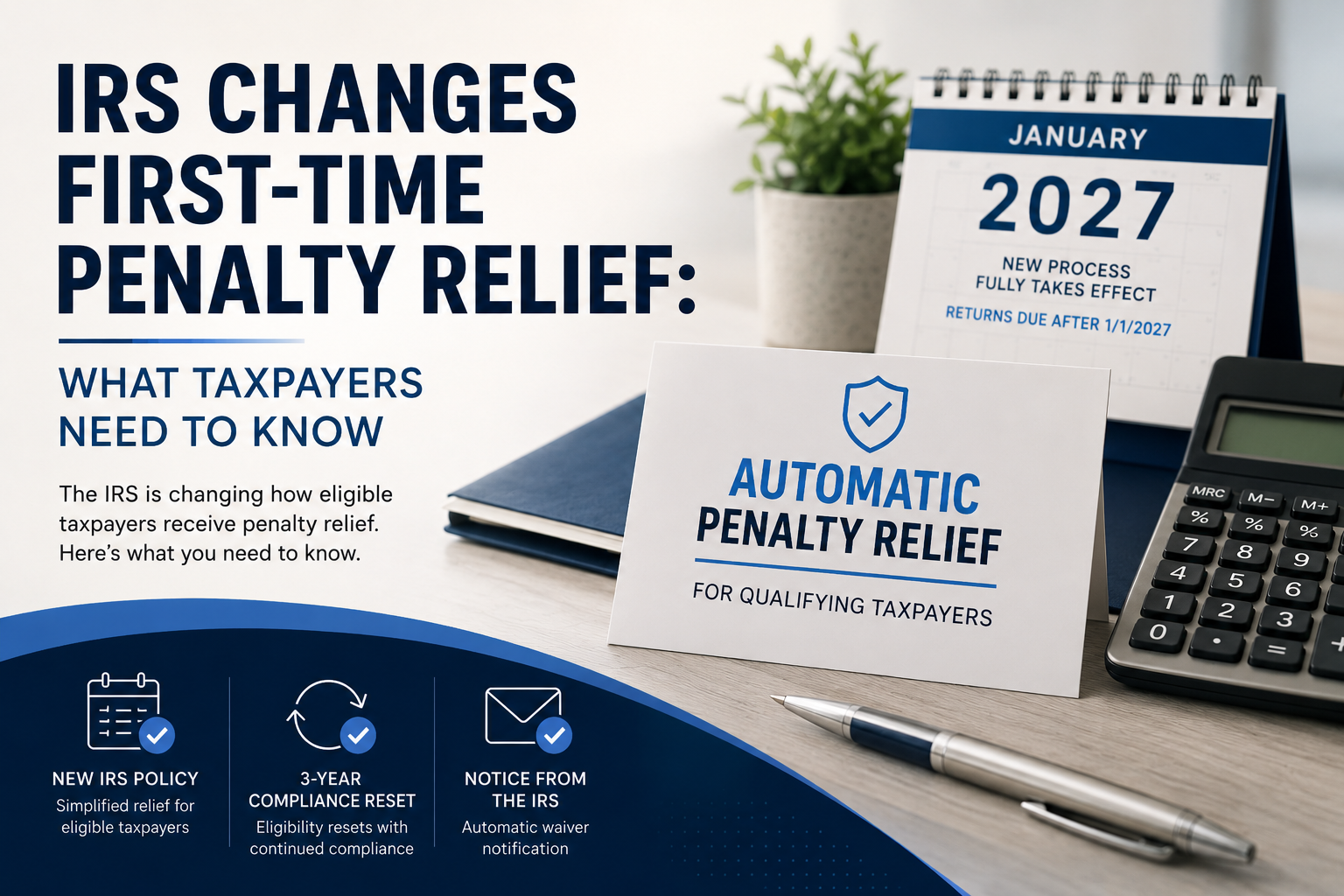
While the new system won't be fully implemented until returns with due dates after January 1, 2027, it's an important change that could eliminate the need to request penalty relief in many situations.
Do I Still Need to Ask the IRS for First-Time Penalty Relief?
Short Answer: Usually, no.
For many eligible taxpayers, the IRS will automatically apply penalty relief instead of requiring a First-Time Abate request. However, the transition won't be fully complete until returns with due dates after January 1, 2027, so the current process will still apply in many situations until then.
What's Changing?
- Under the current First-Time Abate process, eligible taxpayers generally must request penalty relief from the IRS. If approved, the IRS removes the qualifying penalty.
- Under the new process, the IRS will automatically grant penalty relief to eligible taxpayers who meet the IRS compliance requirements. In many cases, there will no longer be a separate request process.
If an automatic penalty waiver is applied, the IRS will send a notice explaining that the penalty has been removed.
Who Qualifies for Automatic Penalty Relief?
The IRS plans to automatically grant relief to taxpayers who have remained compliant with their filing and payment responsibilities during the previous three years, although certain exceptions may apply.
Another important change is that eligibility is expected to reset after three years of continued compliance. In other words, taxpayers who maintain a good compliance history may qualify again in the future if they continue meeting the IRS requirements.
When Does the New Process Take Effect?
The IRS has begun transitioning to the new process, but it won't be fully implemented until returns with due dates after January 1, 2027.
During this transition period:
- Some late-filing penalties may be automatically waived.
- Others may still require a traditional First-Time Abate request.
- Not every taxpayer or every penalty will automatically qualify.
What Should I Do Until the New Process Is Fully Implemented?
Until the transition is complete, continue following the current process if you receive an IRS penalty notice.
Barklee recommends that you:
- Provide every IRS notice to Barklee Financial Group for review.
- Don't assume an automatic waiver will apply to returns due before January 1, 2027.
- Continue following the current First-Time Abate process when appropriate.
- Each IRS notice should be reviewed individually to determine whether penalty relief is available.
Quick Tip: Even if the IRS is moving toward automatic penalty relief, don't ignore an IRS notice. Reviewing it promptly can help ensure you receive any relief you're entitled to and avoid additional penalties or interest.
Why This Matters
This change should make penalty relief simpler for many taxpayers by reducing the need to submit separate requests for First-Time Abate. However, because the IRS is rolling out the new process over time, there will more than likely be situations where the current rules still apply. Understanding which process applies to your situation can help prevent confusion and ensure you don't miss an opportunity for penalty relief.
How Barklee Can Help
IRS procedures continue to evolve, and penalty relief is no exception.
If you receive an IRS notice, don't ignore it—or assume the IRS has already applied every available waiver. Forward the notice to Barklee Financial Group, and we'll review your situation, determine whether penalty relief may be available, and help you understand the next steps.
Whether the current First-Time Abate process applies or the new automatic relief is available, Barklee Financial Group is here to help you navigate changing IRS rules with confidence.