How It Works, Contribution Limits, and Pros and Cons
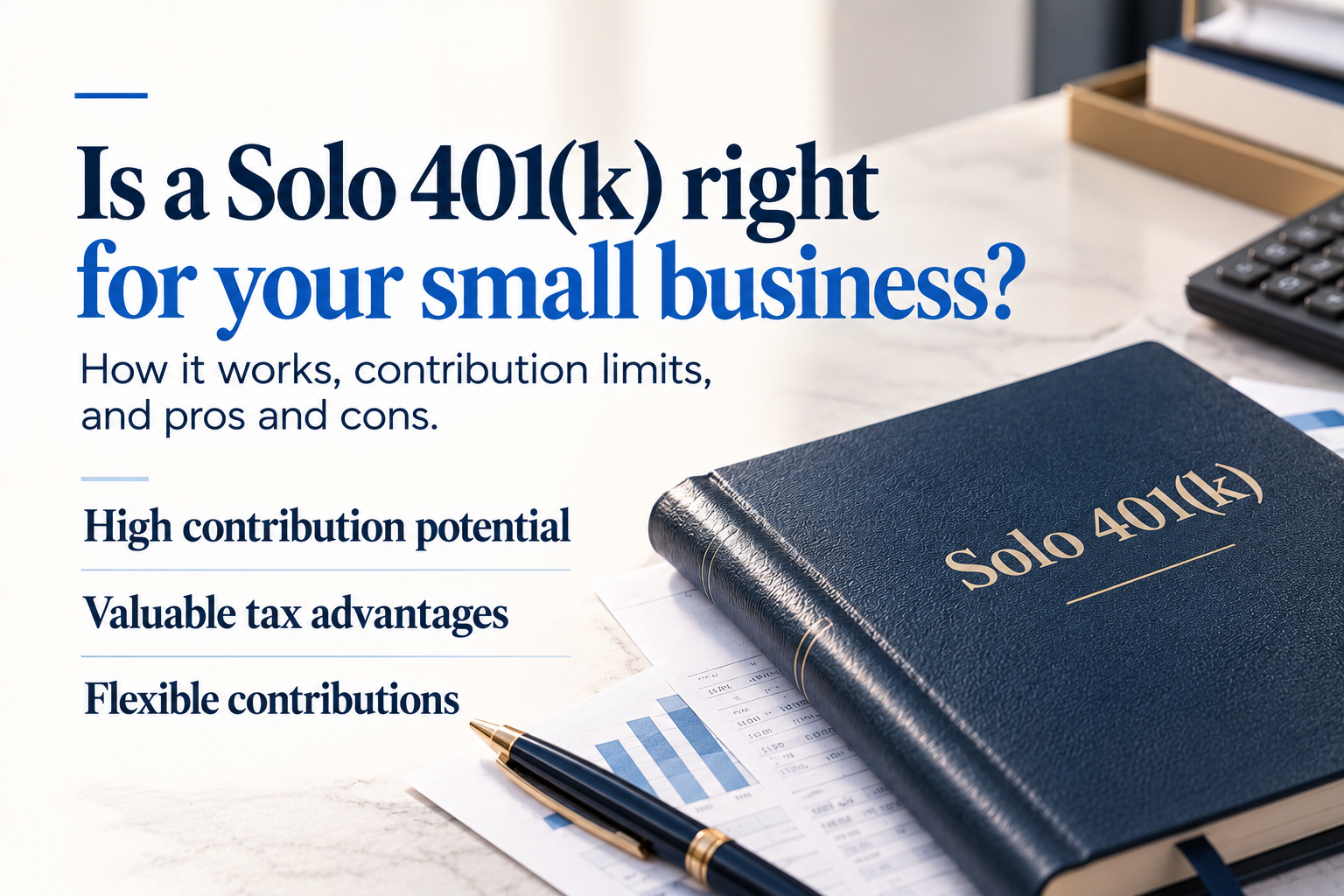
If you're self-employed or own a small business, a Solo 401(k) may offer an opportunity to build retirement savings while providing valuable tax advantages. Understanding how the plan works, how much you can contribute, and what is required to maintain it can help you decide whether it's a good fit for your business.
What Is a Solo 401(k), and How Does It Work?
Short Answer: A Solo 401(k), also called a One-Participant 401(k), is a retirement plan designed for a business owner who does not have employees, other than potentially a spouse. Because you are both the employee and the employer, you can contribute to the plan in both roles. As the employee, you can make elective salary deferrals. As the employer, you can make additional profit-sharing or nonelective contributions.
This combination can allow self-employed individuals to make larger annual retirement contributions than some other retirement plan options.
How Much Can I Contribute to a Solo 401(k) in 2026?
The amount you can contribute depends on your income, your age, and the applicable annual IRS limits.
Employee contributions
As the employee, you can contribute up to the standard annual 401(k) elective deferral limit:
- 2025: $23,500
- 2026: $24,500
Additional catch-up contributions are available for eligible individuals age 50 or older.
Employer contributions
As the employer, you can generally contribute up to 25% of compensation. For a self-employed individual, this typically works out to approximately 20% of net self-employment income after the required IRS adjustments.
Total annual contribution limits
Total annual contributions to the plan are limited by the annual defined contribution plan limit:
- 2025: $70,000
- 2026: $72,000
These limits apply to each participant before certain eligible catch-up contributions.
Quick Tip
Because a Solo 401(k) allows both employee and employer contributions, it can be especially valuable for higher-income business owners who want to maximize retirement savings and potentially reduce taxable income.
Who Is Eligible for a Solo 401(k)?
Self-employed individuals, including sole proprietors and partners, may establish a Solo 401(k) if they have earned income from the business.
These plans are generally best suited for businesses that do not have common-law employees other than the owner's spouse.
If you currently have employees or plan to hire employees, it's important to discuss how that could affect your retirement plan options.
What Are the Advantages of a Solo 401(k)?
A Solo 401(k) offers several potential benefits for eligible business owners:
- Higher contribution potential. A Solo 401(k) can allow for one of the highest retirement contributions available to a self-employed individual because you can combine employee contributions with employer contributions.
- Tax advantages. This can be especially valuable for higher-income business owners who want to maximize retirement savings and potentially reduce taxable income.
- Contribution flexibility. Employer contributions may generally be made up through the applicable tax return filing deadline.
- Additional first-year flexibility. In certain situations, a sole proprietor may also have additional flexibility when making first-year elective deferrals.
What Are the Disadvantages of a Solo 401(k)?
While a Solo 401(k) offers valuable benefits, it also comes with additional responsibilities.
- More administration. A Solo 401(k) requires more administration than retirement plans such as a SEP IRA or SIMPLE IRA.
- Plan documentation and reporting. The plan requires formal plan documents and may eventually require annual Form 5500-EZ or Form 5500 filings once certain filing requirements are met.
- More complex contribution calculations. Self-employed individuals must use special calculations to determine earned income and the maximum employer contribution allowed.
These requirements are important to consider when comparing a Solo 401(k) with other retirement plan options.
How Do I Know If a Solo 401(k) Is the Right Retirement Plan for My Business?
There is no single retirement plan that works best for every self-employed individual or business owner. The right choice depends on factors such as your income, business structure, number of employees, cash flow, and long-term retirement goals.
Because each option has different tax benefits, contribution limits, and employer requirements, choosing a retirement plan should be done with the help of a qualified tax professional who understands your business and your overall tax strategy.